Why microwave cooking can be uneven
Microwaves heat food through energy absorption, but the result is affected by thickness, moisture, stirring, container shape, and whether the turntable rotates well. A food can have very hot areas and colder spots at the same time.
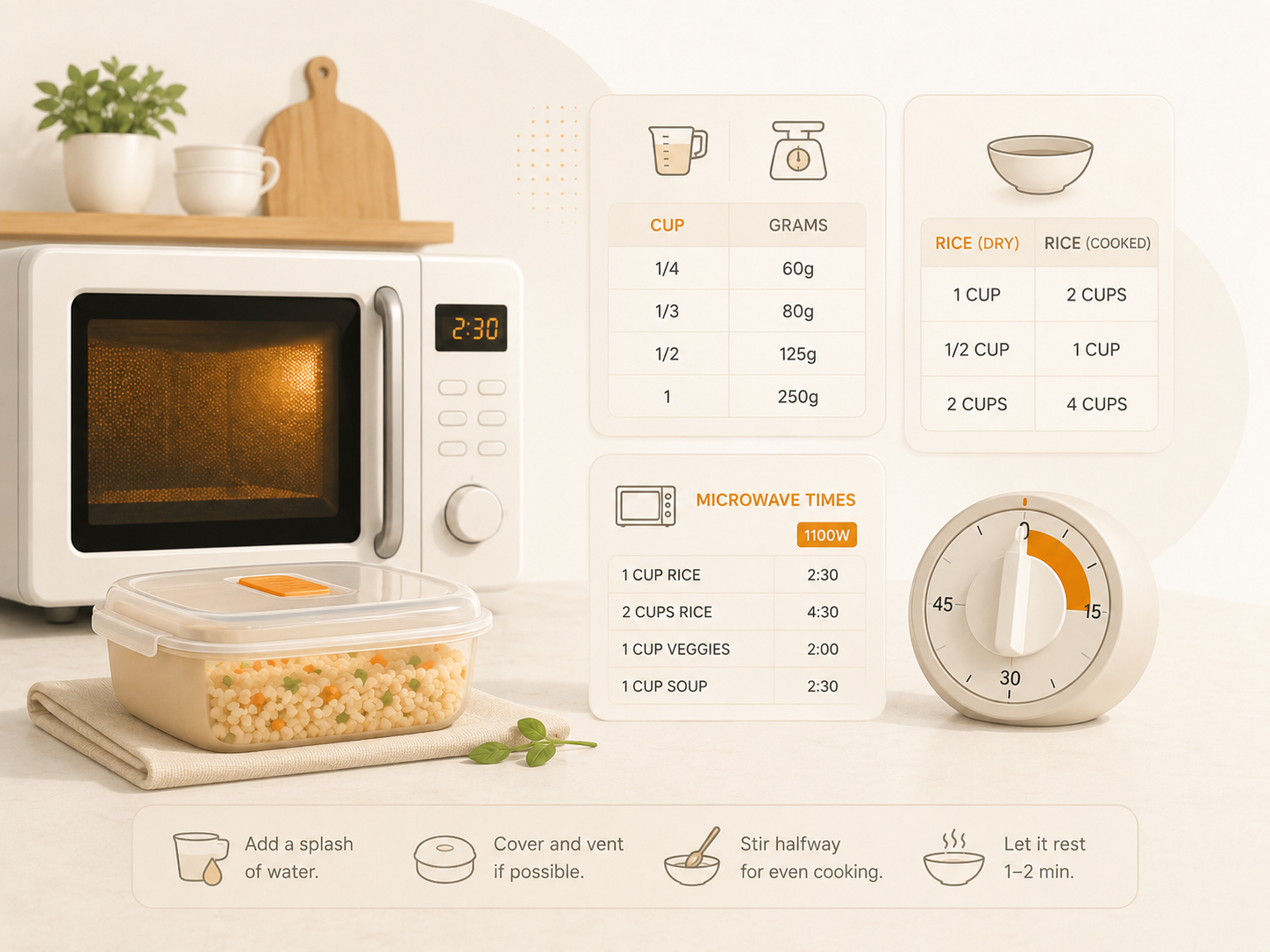
Stirring and rotating are not optional
If the package says to stir halfway through, rotate the tray, vent a film, or rearrange pieces, keep those steps. They help distribute heat more evenly and can matter as much as the total cooking time.
Keep the standing time
Standing time lets heat continue moving through the food after the microwave turns off. If instructions say to let the meal stand, wait before eating and before judging whether it is done.
Check foods that require safe internal temperatures
For raw or partially cooked meat, poultry, egg dishes, casseroles, and leftovers where safety matters, use a food thermometer. A calculator can estimate time, but it cannot see the food temperature.
Use microwave-safe containers
Use containers labeled microwave-safe. Avoid metal, containers not intended for heat, and plastics that are not labeled for microwave use. Follow package instructions when a product includes a dedicated tray or film cover.
When to add more time
If food is cold in the center, add short increments rather than a large extra block. Stir or rotate again when practical, then allow standing time before checking again.
Simple rule
Use this site to estimate a better starting time. Use package directions, your senses, and a food thermometer when safety depends on the final temperature.