Use a food thermometer
Time conversion only estimates how long to cook. For meat, poultry, eggs, casseroles, leftovers, and seafood, check the food with a thermometer where a safe internal temperature is required.
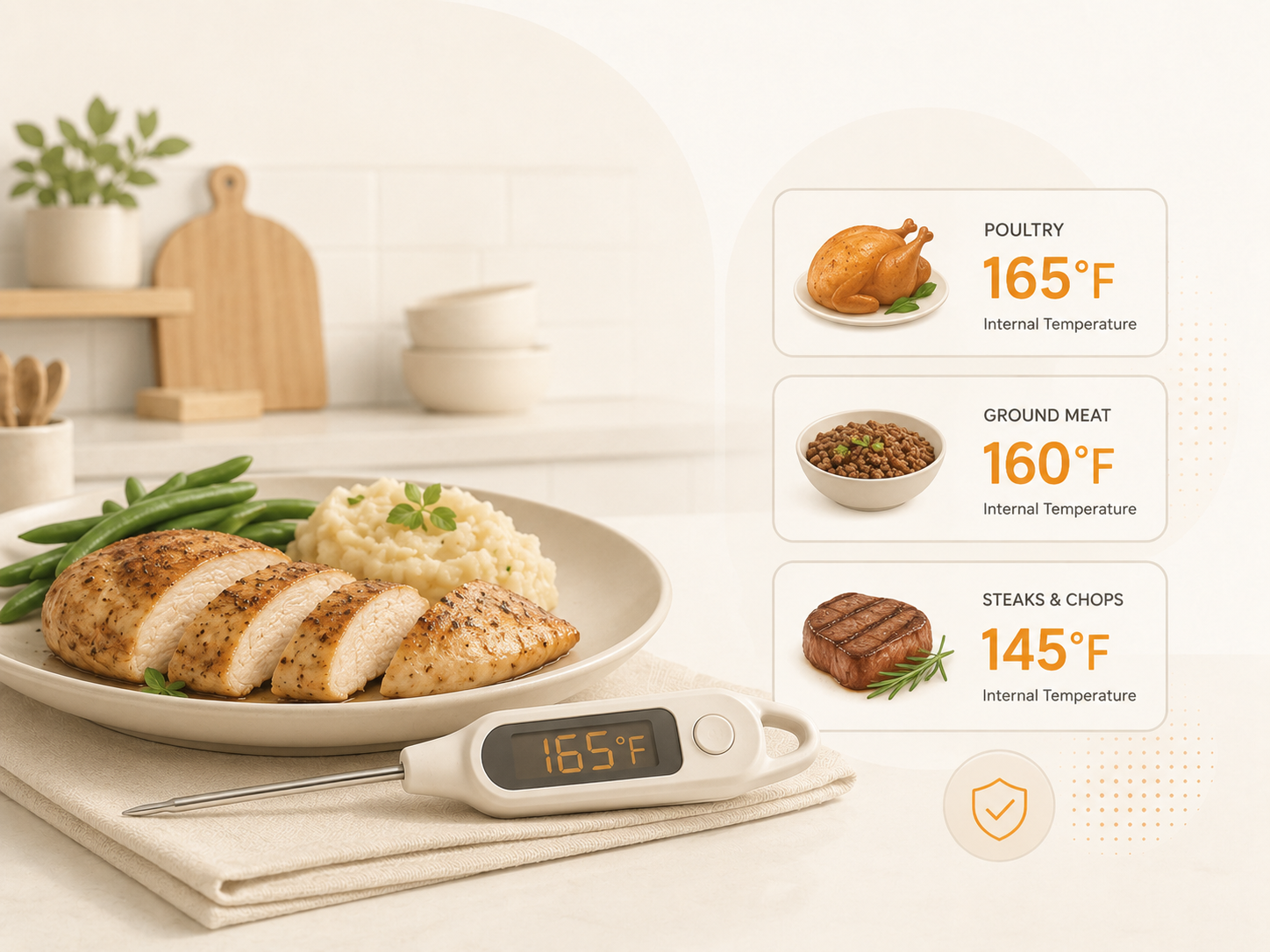
| Food | Type | Temperature / Doneness | Notes |
|---|---|---|---|
| Beef, bison, veal, goat, and lamb | Steaks, roasts, and chops | 145°F / 63°C | Rest for 3 minutes. |
| Beef, pork, veal, lamb, and goat | Ground meat and sausage | 160°F / 71°C | Applies to ground red meats. |
| Chicken, turkey, and other poultry | Whole bird, pieces, ground poultry, giblets, sausage, and stuffing inside poultry | 165°F / 74°C | Check the thickest part and stuffing center when applicable. |
| Pork | Steaks, roasts, and chops | 145°F / 63°C | Rest for 3 minutes. |
| Ham | Raw ham | 145°F / 63°C | Rest for 3 minutes. |
| Ham | Precooked ham reheated at home | 165°F / 74°C | USDA-inspected packaged cooked ham may be reheated to 140°F / 60°C. |
| Eggs | Raw eggs | Cook until yolk and white are firm | Do not rely on time alone. |
| Egg dishes | Frittata, quiche, and similar dishes | 160°F / 71°C | Check the center of the dish. |
| Casseroles | Meat, poultry, and meatless casseroles | 165°F / 74°C | Microwaved casseroles should be checked in more than one spot. |
| Leftovers | Any type | 165°F / 74°C | Stir, cover, rotate, and allow standing time when reheating in a microwave. |
| Rabbit and venison | Wild or farm-raised | 160°F / 71°C | Use a food thermometer. |
| Seafood | Fish, whole or filet | 145°F / 63°C | Or cook until flesh is opaque and separates easily with a fork. |
| Seafood | Shrimp, lobster, crab, and scallops | Cook until pearly or white and opaque | Visual doneness guidance from FoodSafety.gov. |
| Shellfish | Clams, oysters, and mussels | Cook until shells open during cooking | Discard shellfish that do not open. |
Why this belongs with a microwave calculator
Microwaves can heat unevenly. A converted time may be mathematically correct but still leave cold spots if the food was not stirred, rotated, covered, vented, or allowed to stand as directed. For a deeper explanation, read how microwaving works.
Microwave reheating reminder
For leftovers and mixed dishes, stir when practical, cover to hold moisture, rotate the dish if needed, allow standing time, and check more than one spot before serving.
Source
This chart is based on the safe minimum internal temperature guidance published by FoodSafety.gov, a U.S. government food safety resource managed by the Department of Health & Human Services with USDA, FDA, and CDC partners.